


Royal Geographic Society Annual Conference
Food Geographies Research Group 28/08/2025
The session is drawn from the ongoing artistic practice of artist, curator and researcher Cherry Truluck in her recent publication ’The End is the Beginning (is the end is the beginning….)” (published by Cement Fields). This visual essay spins a narrative around the temporalities of rhubarb production in Denmark and the UK, arguing for a blurring of the perceived boundary between metaphor and reality as a creative and decolonial contribution to research practice.
In the Handbook of Arts-Based Research, Patricia Leavy defines “ABR [Arts-Based Research] practices as methodological tools used by researchers across the disciplines during any or all phases of research, including problem generation, data or content generation, analysis, interpretation, and representation” (Leavy 2009). But what is lost in this instrumentalisation of creative practices and where (or who) is the artist?
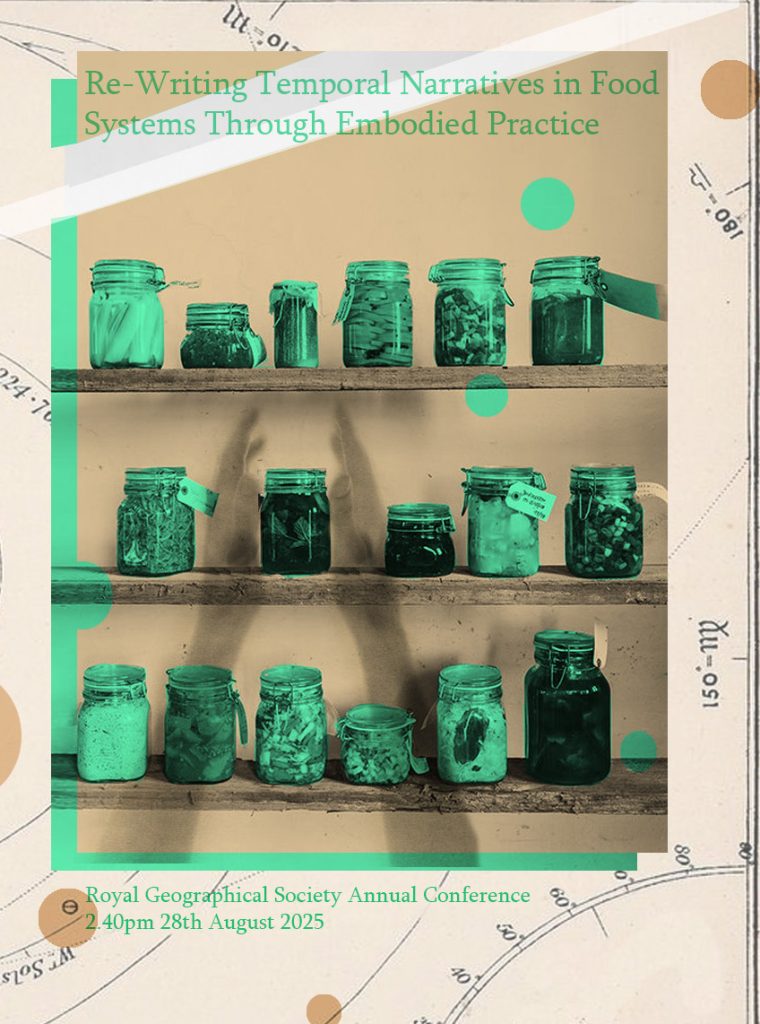
A subtle distinction can be made within what Leavy calls “an umbrella category that encompasses all artistic approaches to research” (Leavy 2018) and that is to consider art not as a tool at the service of researchers but as a research modality in itself. This requires a more radical approach to knowledge-making, one in which the researcher might act as a farmer of artistic processes (their own or the practice of others), approaching it as a seasonal (temporal) praxis which may or may not generate a direct response to the initial enquiry but which one can be confident will certainly have a transformative impact on the embedded epistemes connected to it. Rhubarb can cross-pollinate, so seedlings of different varieties grown close to one another or in the path of a strong wind may, over generations, grow into plants which do not resemble their ‘parents’ – but who can tell what flavourful transformations might arise from these random mutations?
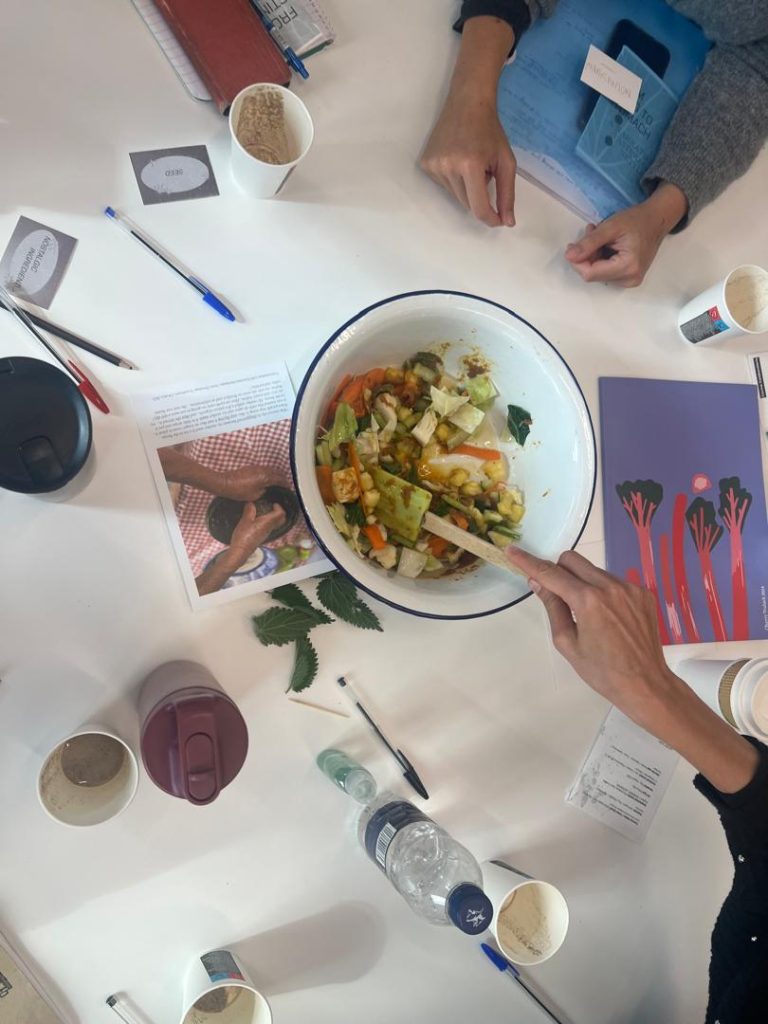
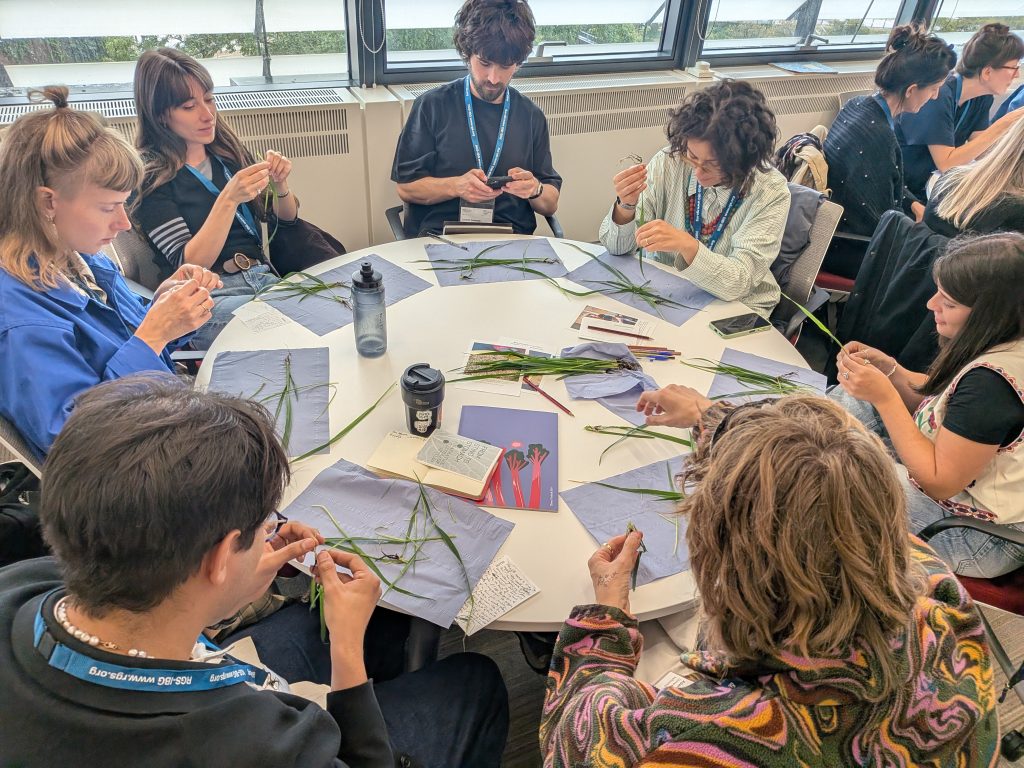
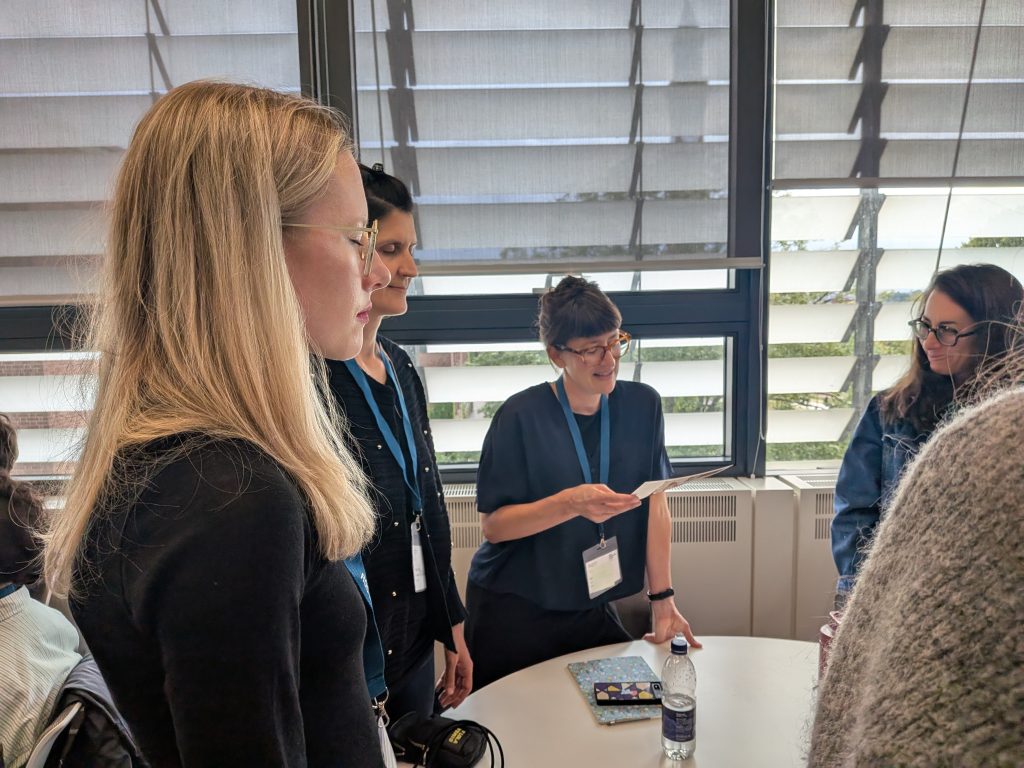
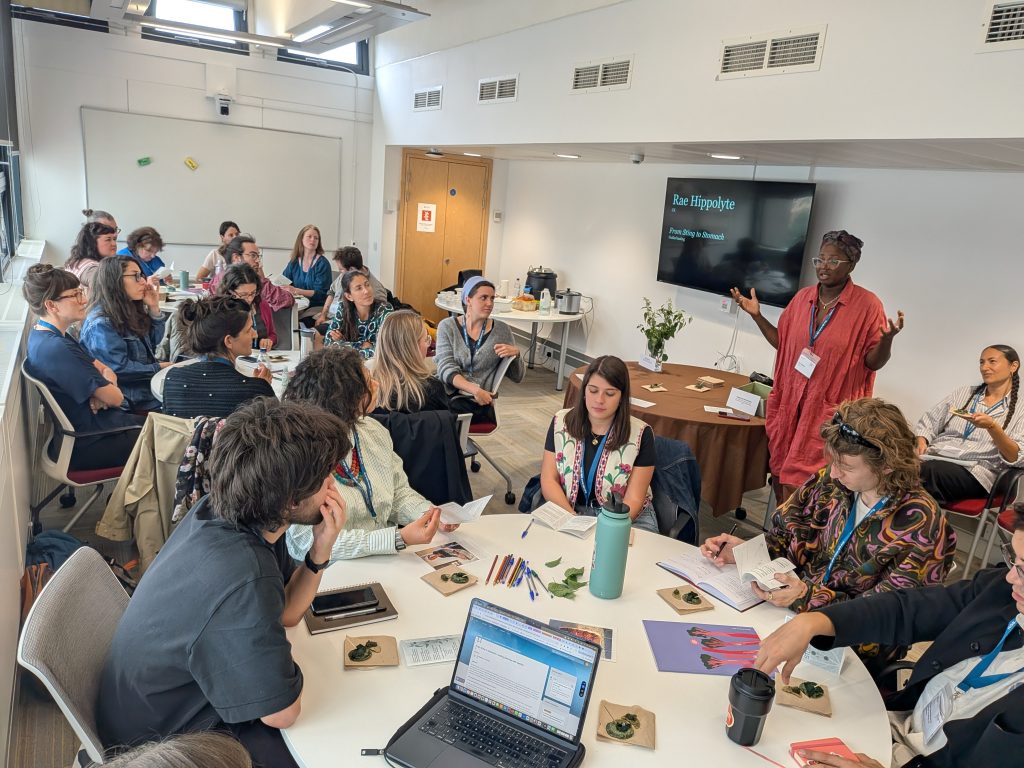
In the session, guided by Truluck’s sensory storytelling practice, participants were invited to take part in a series of experiments into embodied research practice, designed to open up conversation around ideas of praxis (building on Freire, 1972), embodied research/inquiry and arts-based research. Underscored by a specially commissioned sonic landscape by ‘broken folk’ duo Lunatraktors and a narrative structure developed with Mexican collective Cocina CoLaboratorio, participants encountered a series of different ingredients each inhabiting their own temporal geographies. The session included a micro-workshop on oat stem dissection with Dr Irene Griffiths (University of Aberystwyth), a re-storying of the sting of a nettle through taste by grower Rae Hippolyte, a meditation on maize with artist Jess Zamora-Turner and a collective pickling experience with artist and Jar Squad animator Carmen Wong where they made Peranakan pickle Achar.